Company
Solvect AI
Time & Role
2025.11-Present Co-Founder
A 0→1 Build of an AI-Native Multi-Agent Investment Platform
Overview
Overview
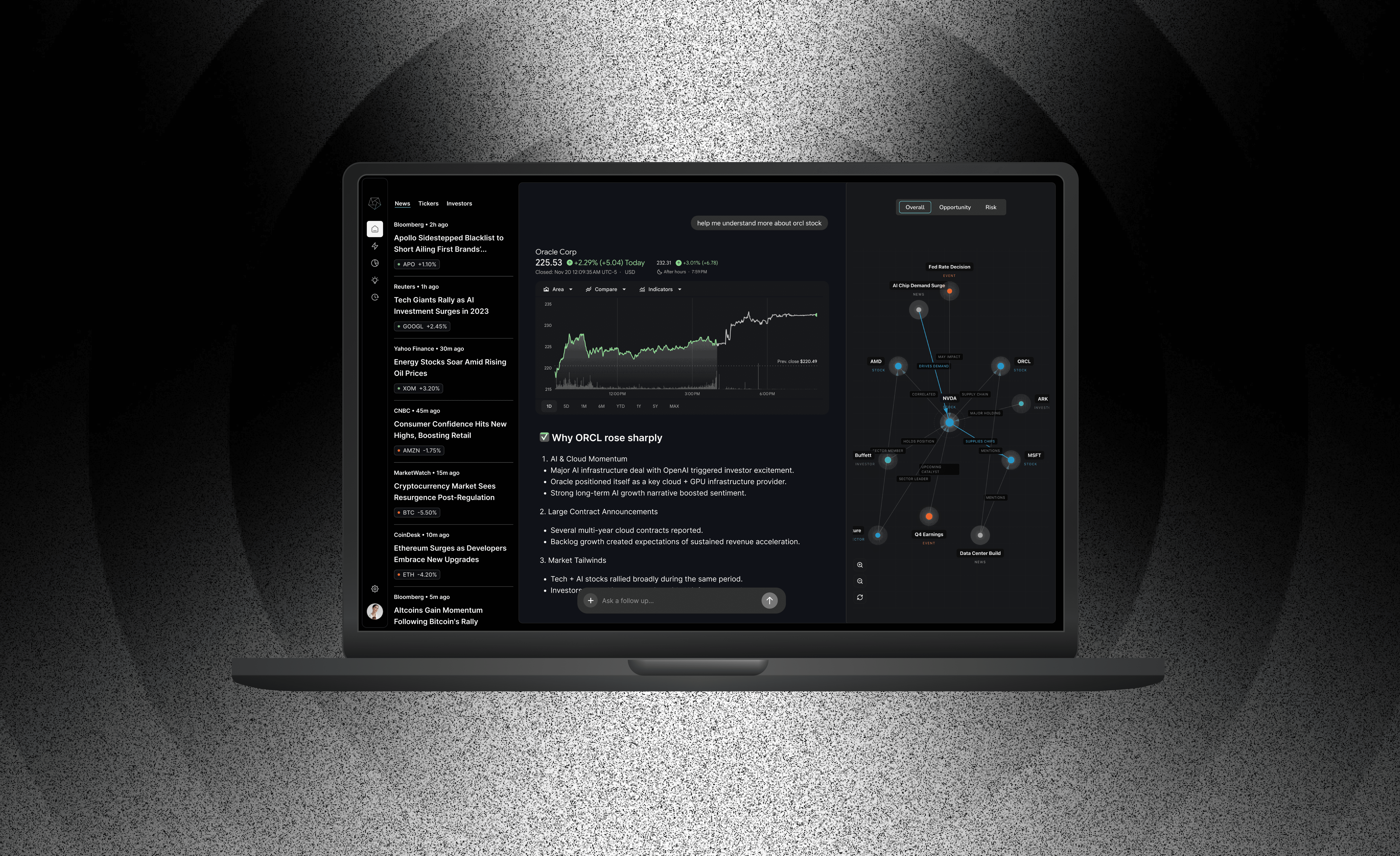
Solvect AI is an AI-native quantitative finance system designed for retail investors to run the full investment cycle—from opportunity discovery and decision-making to execution and learning from outcomes.
I initiated and led the project from concept to MVP, owning product definition, interaction design, and front-end development. I defined how users and AI agents interact, shaped agent behaviors and system architecture, and designed interfaces that keep reasoning, causality, and control explicit in a high-stakes financial context.
We shipped an MVP within three months, and our open-source version (excluding design assets) has gained strong traction on GitHub.
Solvect AI is an AI-native quantitative finance system designed for retail investors to run the full investment cycle—from opportunity discovery and decision-making to execution and learning from outcomes.
It uses a real-time chat-to-graph architecture and an Event → Asset → Action → Feedback multi-agent loop to transform unstructured market signals into structured reasoning graphs and executable actions.
I initiated and led the project from concept to MVP, owning product definition, interaction design, and front-end development. I defined how users and AI agents interact, shaped agent behaviors and system architecture, and designed interfaces that keep reasoning, causality, and control explicit in a high-stakes financial context.
We shipped an MVP within three months, and our open-source version (excluding design assets) has gained strong traction on GitHub.
Role
Co-founder, Product manager, Product designer, Front-end developer, Marketing
Co-founder, Product manager, Product designer, Front-end developer, Marketing
Domain
Quant finance, Agentic UX, System design
Quant finance, Agentic UX, System design
Team
A two-person team, collaborating with an AI Engineer
A two-person team, collaborating with an AI Engineer
Key System Innovation 01:
Visualizing financial reasoning
Key System Innovation 01:
Visualizing financial reasoning
Real-Time “Think on Graph”
Investing is a reasoning problem, but most tools present information as feeds or linear chat. The causal structure remains hidden.
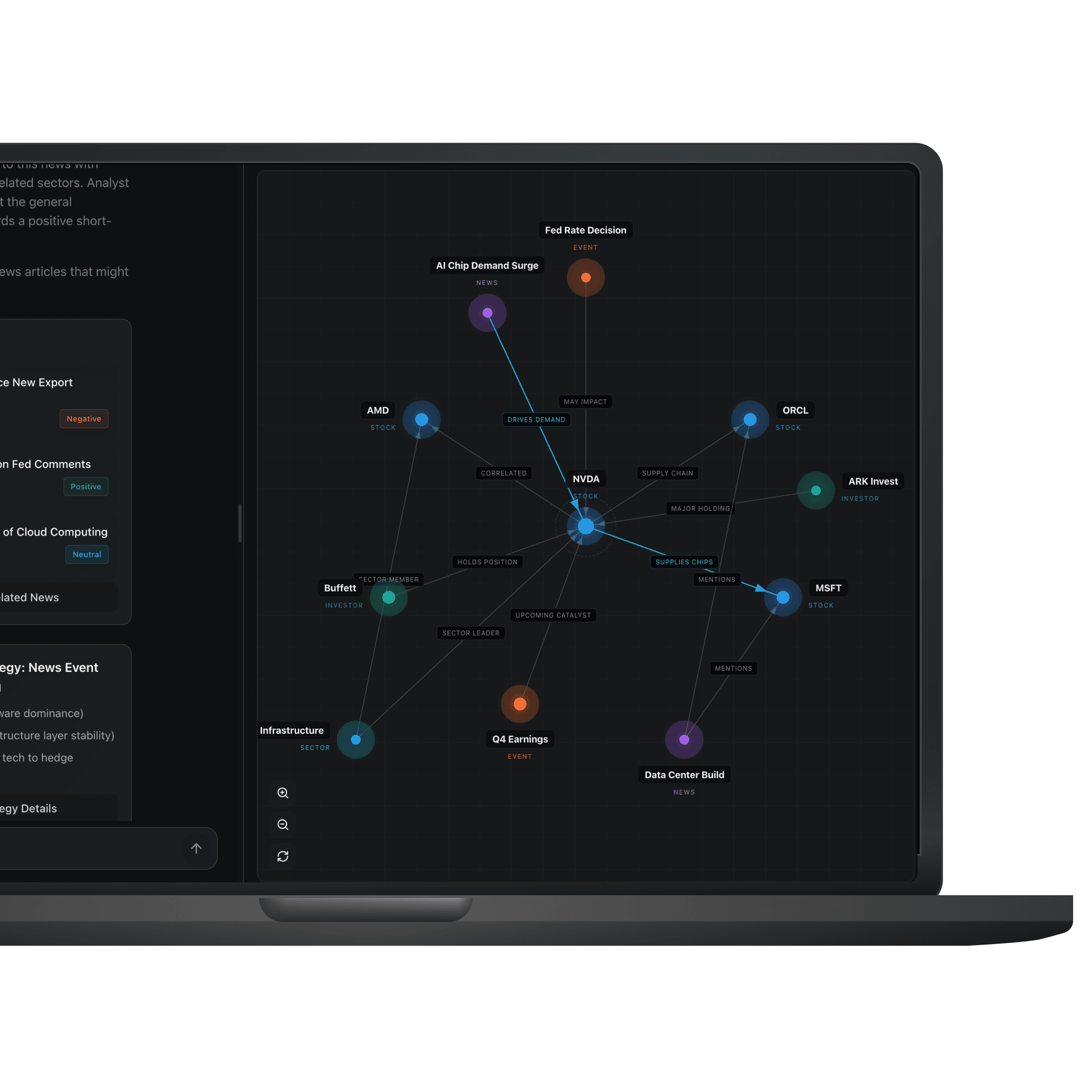
I designed a real-time “Think on Graph” model that externalizes financial reasoning as a live knowledge graph alongside the conversation. The graph updates in real time, turning chat into collaborative reasoning rather than reactive Q&A.
Real-Time “Think on Graph”
Investing is a reasoning problem, but most tools present information as feeds or linear chat. The causal structure remains hidden.
I designed a real-time “Think on Graph” model that externalizes financial reasoning as a live knowledge graph alongside the conversation. The graph updates in real time, turning chat into collaborative reasoning rather than reactive Q&A.
Key System Innovation 02:
Designing Human–Agent Collaboration for Proactive Investing
Key System Innovation 02:
Designing Human–Agent Collaboration for Proactive Investing
Steering the Graph Together
The agent monitors signals and recommends personalized external resources, while users can guide exploration by selecting specific nodes and paths in the graph — narrowing focus to the branches that matter.
Rather than a reactive chatbot, the system becomes a collaborative reasoning environment, where human intent directs the path and machine intelligence expands, validates, and surfaces opportunity.
Steering the Graph Together
The agent monitors signals and recommends personalized external resources, while users can guide exploration by selecting specific nodes and paths in the graph — narrowing focus to the branches that matter.
Rather than a reactive chatbot, the system becomes a collaborative reasoning environment, where human intent directs the path and machine intelligence expands, validates, and surfaces opportunity.
The Problem
The Problem
Most of the investing tool today is built around a fundamentally broken assumption:
They all wait for the user to type in a ticker symbol.
Most of the investing tool today is built around a fundamentally broken assumption:
They all wait for the user to type in a ticker symbol.

By the time a retail investor knows which ticker to type, the opportunity has already passed.
The event happened.
The catalyst fired.
The signal was seen, priced, and captured — by machines and institutions that react to events, not symbols.
But speed is only part of the problem.
By the time a retail investor knows which ticker to type, the opportunity has already passed.
The event happened.
The catalyst fired.
The signal was seen, priced, and captured — by machines and institutions that react to events, not symbols.
But speed is only part of the problem.

Noise Overload, Not Information Scarcity
Modern retail investors aren’t under-informed — they’re overwhelmed. Financial news products surface endless headlines and conflicting narratives, optimized for engagement rather than signal, leaving investors without a clear starting point or sense of priority.
Noise Overload, Not Information Scarcity
Modern retail investors aren’t under-informed — they’re overwhelmed. Financial news products surface endless headlines and conflicting narratives, optimized for engagement rather than signal, leaving investors without a clear starting point or sense of priority.
Quant Finance Is Structurally Inaccessible
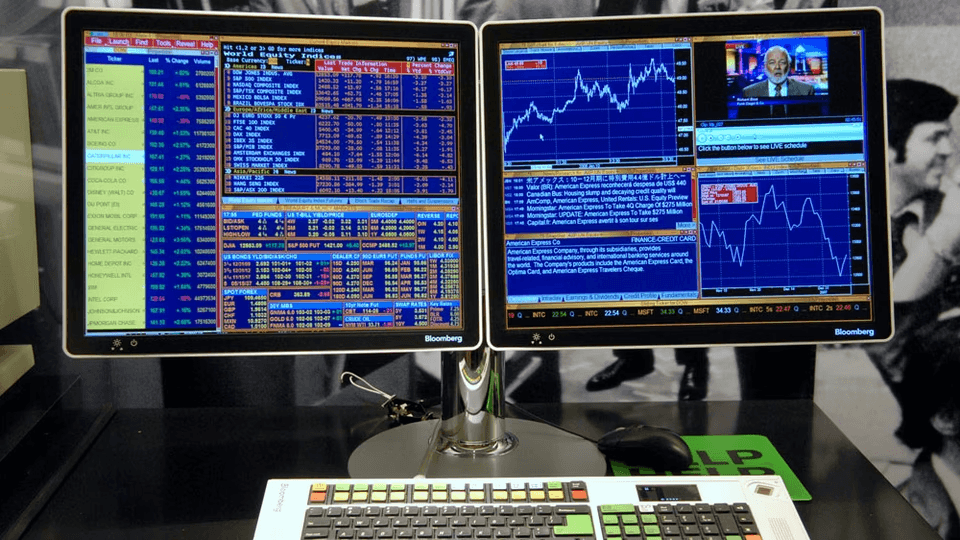
Professional investors operate with fundamentally different tools. Junior quant traders rely on event monitoring, signal attribution, and backtesting workflows to build conviction systematically — capabilities largely locked behind institutional platforms, elite pipelines, and opaque tools like Bloomberg.
Quant Finance Is Structurally Inaccessible
Professional investors operate with fundamentally different tools. Junior quant traders rely on event monitoring, signal attribution, and backtesting workflows to build conviction systematically — capabilities largely locked behind institutional platforms, elite pipelines, and opaque tools like Bloomberg.

A Reactive System in a Proactive Market
The entire consumer investing ecosystem is built on a reactive model: react to news; react to price; react after the signal is already priced in.
A Reactive System in a Proactive Market
The entire consumer investing ecosystem is built on a reactive model: react to news; react to price; react after the signal is already priced in.
The Solution
The Solution
Solvect AI is built on a Think-on-Graph architecture that tightly couples LLMs with knowledge graphs, enabling step-by-step reasoning over interconnected market entities. By reasoning directly on graph structures rather than isolated text, the system can filter noise, attribute signals to underlying events, and surface high-confidence opportunities — lowering the barrier to professional-grade investing and shifting retail investors from reactive behavior to proactive decision-making.
Solvect AI is built on a Think-on-Graph architecture that tightly couples LLMs with knowledge graphs, enabling step-by-step reasoning over interconnected market entities. By reasoning directly on graph structures rather than isolated text, the system can filter noise, attribute signals to underlying events, and surface high-confidence opportunities — lowering the barrier to professional-grade investing and shifting retail investors from reactive behavior to proactive decision-making.
How I build it
How I build it
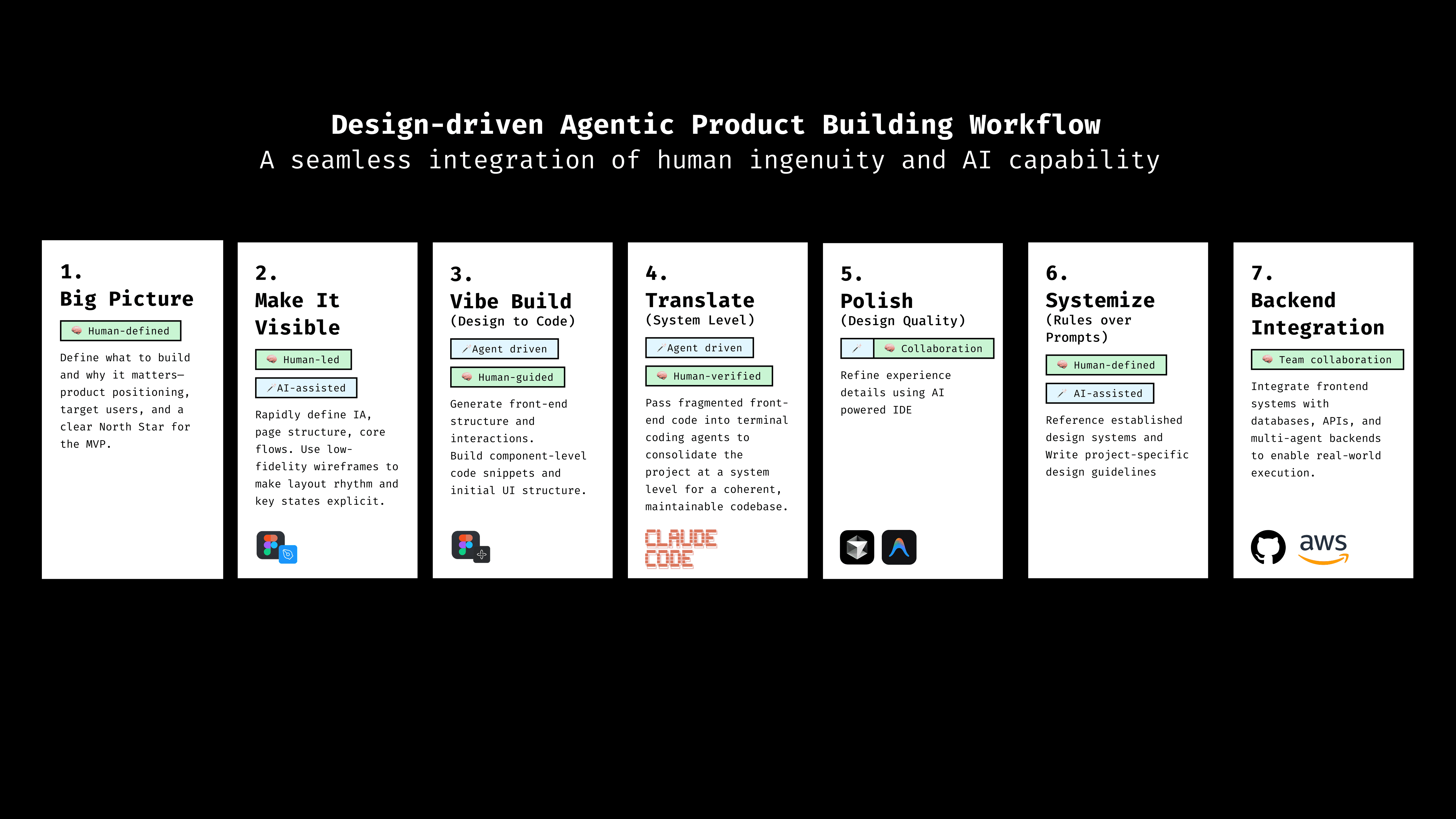
I leverage years of design thinking to define logic and deconstruct systems, then orchestrate AI agents to handle the heavy lifting of execution. This is my product building framework under the AI era—a workflow specifically for designers to ship high-value products with smaller teams, or even as a solo builder. Learn more about this framework.
I leverage years of design thinking to define logic and deconstruct systems, then orchestrate AI agents to handle the heavy lifting of execution. This is my product building framework under the AI era—a workflow specifically for designers to ship high-value products with smaller teams, or even as a solo builder. Learn more about this framework.
Motivation & Domain Context
Motivation & Domain Context
I used to intern at a Private Equity firm in Hong Kong, and I saw how junior quant traders operate in practice: relying on event monitoring, signal attribution, and backtesting workflows, with decisions shaped by systems rather than intuition or charts. With AI era coming, this experience led me to a central design question:
I used to intern at a Private Equity firm in Hong Kong, and I saw how junior quant traders operate in practice: relying on event monitoring, signal attribution, and backtesting workflows, with decisions shaped by systems rather than intuition or charts. With AI era coming, this experience led me to a central design question:
HowmightwedesignanAI-nativesystemthatenablesretailinvestorstothinkandactlikejuniorquanttraders—withmulti-agentsoperatingastheirpersonalteam?
HowmightwedesignanAI-nativesystemthatenablesretailinvestorstothinkandactlikejuniorquanttraders—withmulti-agentsoperatingastheirpersonalteam?
The Architecture-First:
Designing from the System Up
The Architecture-First:
Designing from the System Up
In agent-native systems, user experience is constrained by how the system reasons. Before designing any UI, I explored how the product could function as a pure agent system — where agents reason, coordinate, and act without human interfaces. This helped clarify what interactions were fundamentally necessary versus purely presentational.
In agent-native systems, user experience is constrained by how the system reasons. Before designing any UI, I explored how the product could function as a pure agent system — where agents reason, coordinate, and act without human interfaces. This helped clarify what interactions were fundamentally necessary versus purely presentational.
Studied research papers on knowledge graphs and context graphs

Studied research papers on knowledge graphs and context graphs
Explored how agents could reason over events → entities → assets

Explored how agents could reason over events → entities → assets
Worked closely with an AI engineer

Worked closely with an AI engineer
The Research: Deconstructing the "Quant Brain"
The Research: Deconstructing the "Quant Brain"
To design a smarter retail investing experience, I didn’t limit research to end users alone. Instead, I treated professional investors as reference models and studied how they think and operate in practice.
I interviewed a few buy-side quant traders (mid- and low-frequency) and analysts with event-driven strategies, mapping how investment ideas are formed, how conviction builds over time, and when humans intervene versus when systems act autonomously. These professional workflows became the blueprint for defining agent behaviors — not just surface-level UI features.
To design a smarter retail investing experience, I didn’t limit research to end users alone. Instead, I treated professional investors as reference models and studied how they think and operate in practice.
I interviewed a few buy-side quant traders (mid- and low-frequency) and analysts with event-driven strategies, mapping how investment ideas are formed, how conviction builds over time, and when humans intervene versus when systems act autonomously. These professional workflows became the blueprint for defining agent behaviors — not just surface-level UI features.
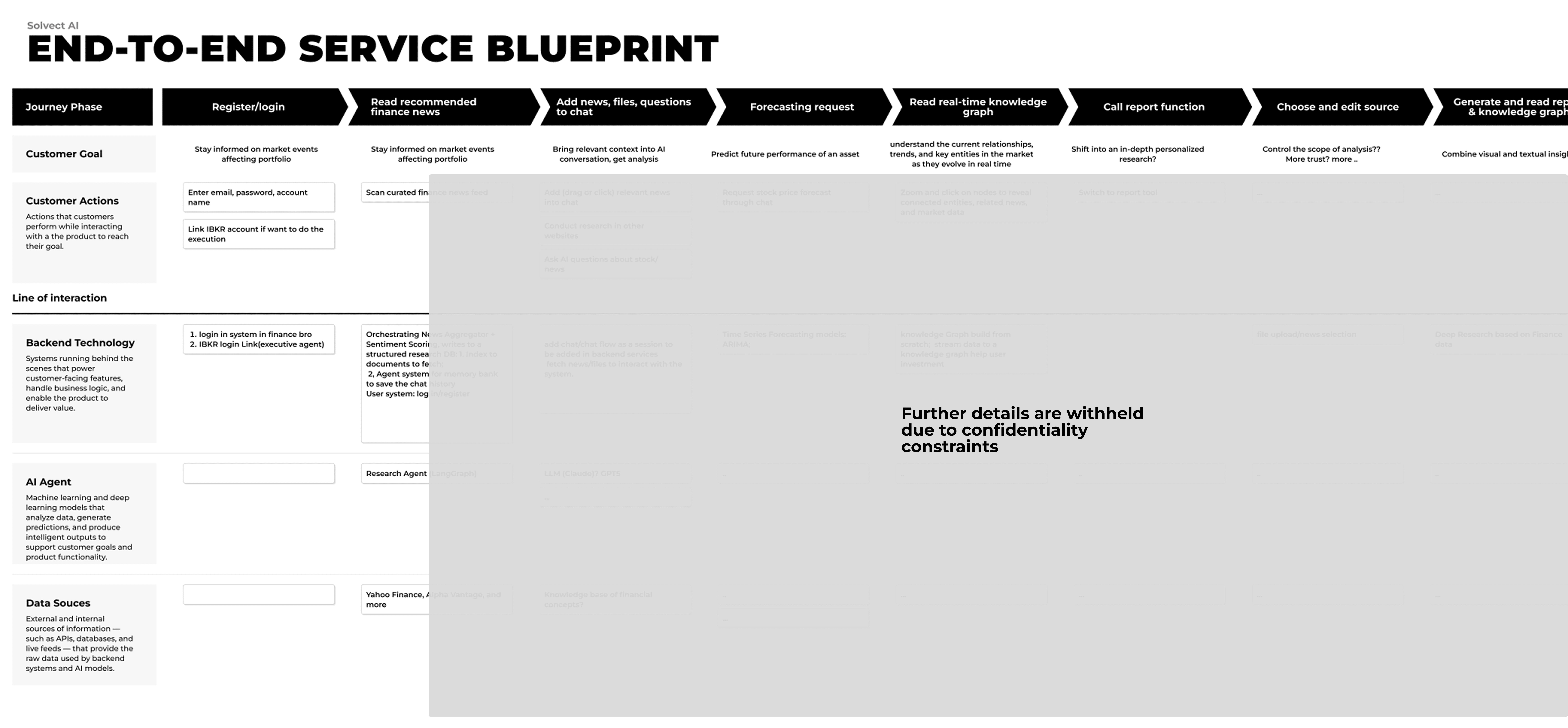
Designing the "Agentic Loop"
Designing the "Agentic Loop"
I was deeply involved in defining how this loop operates by shaping different agents' role and their collaboration — including event detection, attribution and reasoning, and personalization and execution. I also defined critical human-in-the-loop moments, determining when the system should ask for input, explain its reasoning, or act autonomously.
I was deeply involved in defining how this loop operates by shaping different agents' role and their collaboration — including event detection, attribution and reasoning, and personalization and execution. I also defined critical human-in-the-loop moments, determining when the system should ask for input, explain its reasoning, or act autonomously.
Exploring Human–Agent Interaction Patterns
I explored multiple human–agent interaction patterns to understand how different interfaces externalize agent reasoning and support user decision-making. By experimenting with canvas-based exploration, knowledge-graph-centered workplace, and chat-first workflows, I evaluated how each pattern shapes user cognition, surfaces causality, and balances agent guidance with human control.
I explored multiple human–agent interaction patterns to understand how different interfaces externalize agent reasoning and support user decision-making. By experimenting with canvas-based exploration, knowledge-graph-centered workplace, and chat-first workflows, I evaluated how each pattern shapes user cognition, surfaces causality, and balances agent guidance with human control.
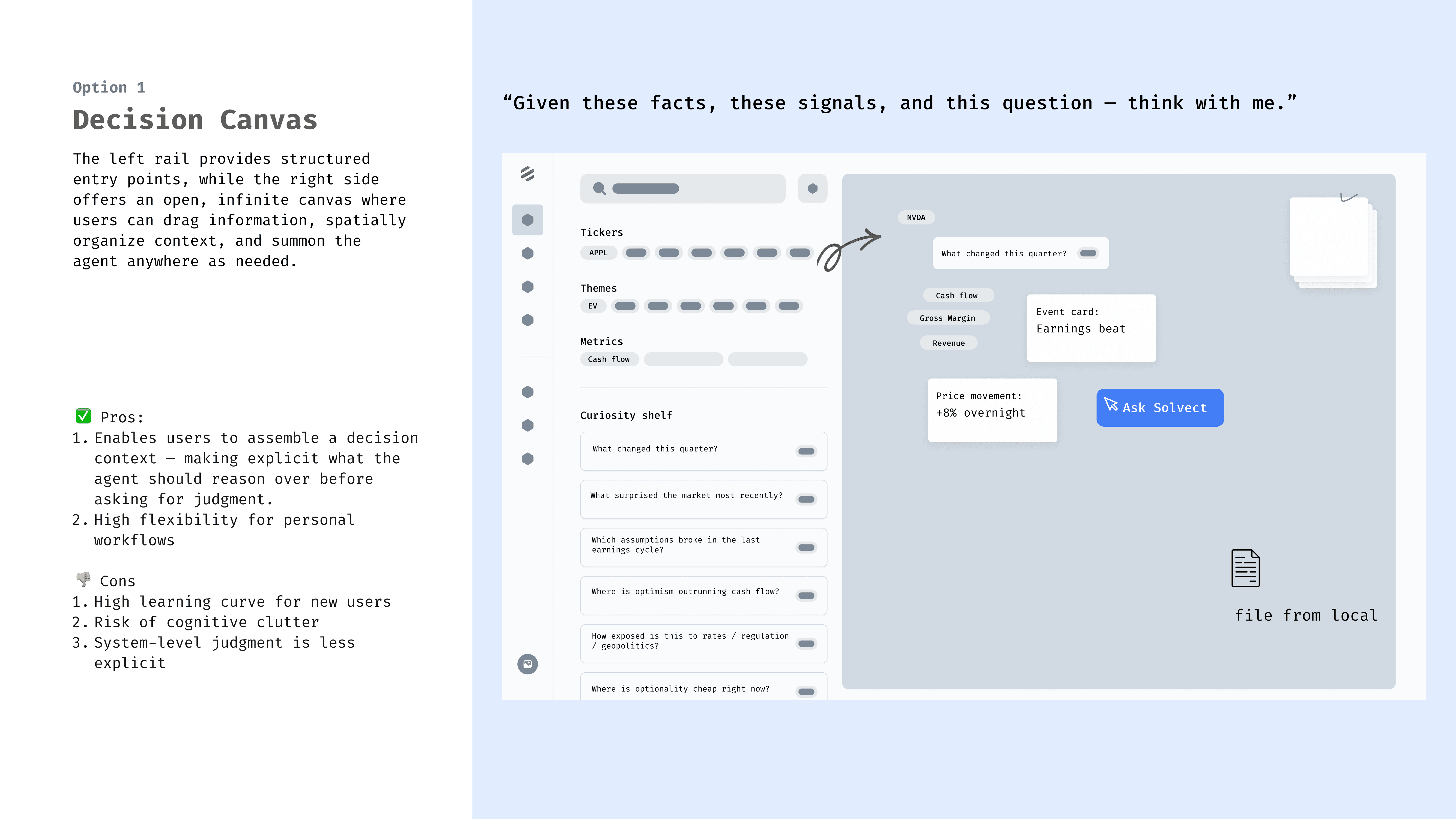
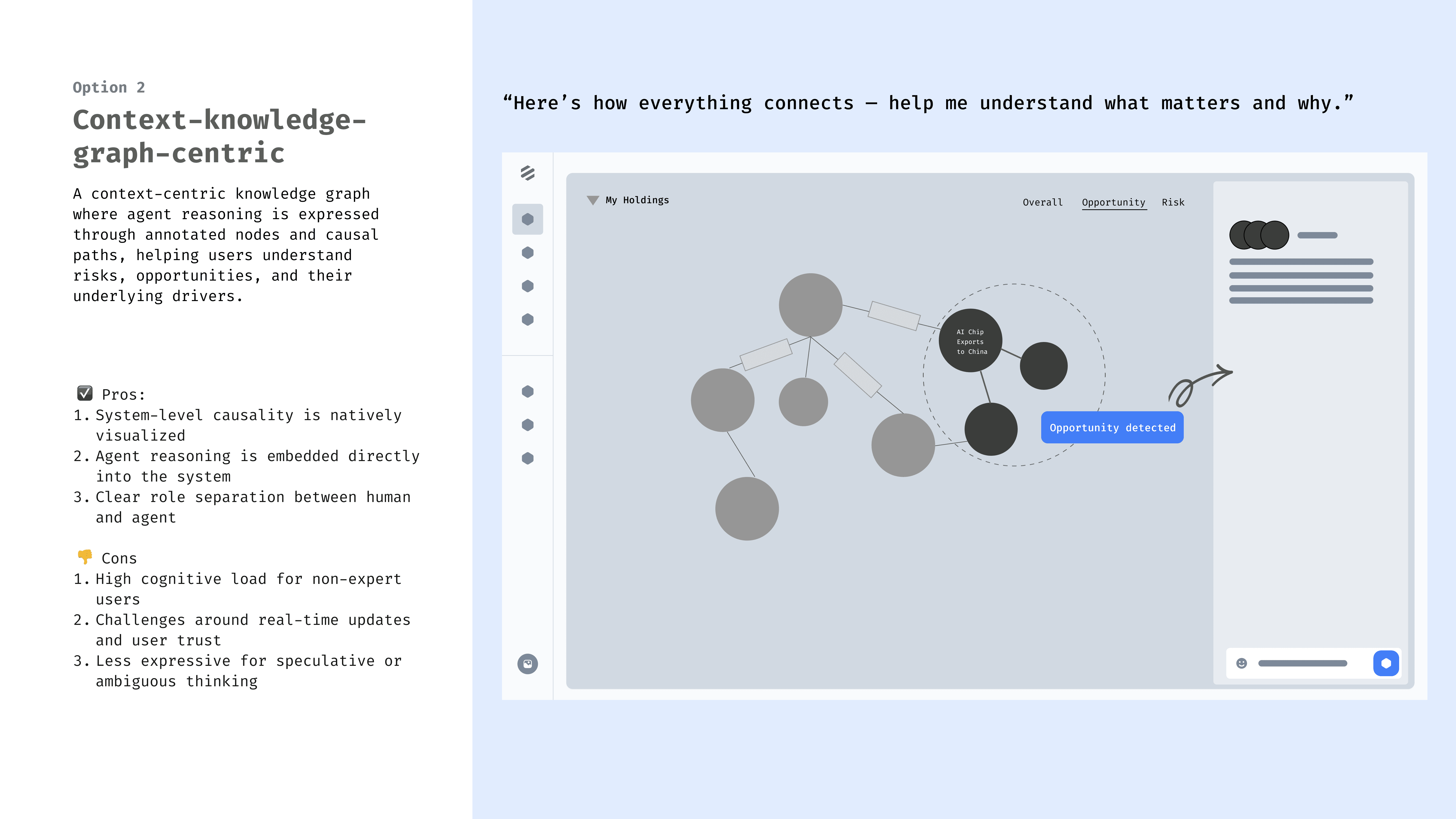
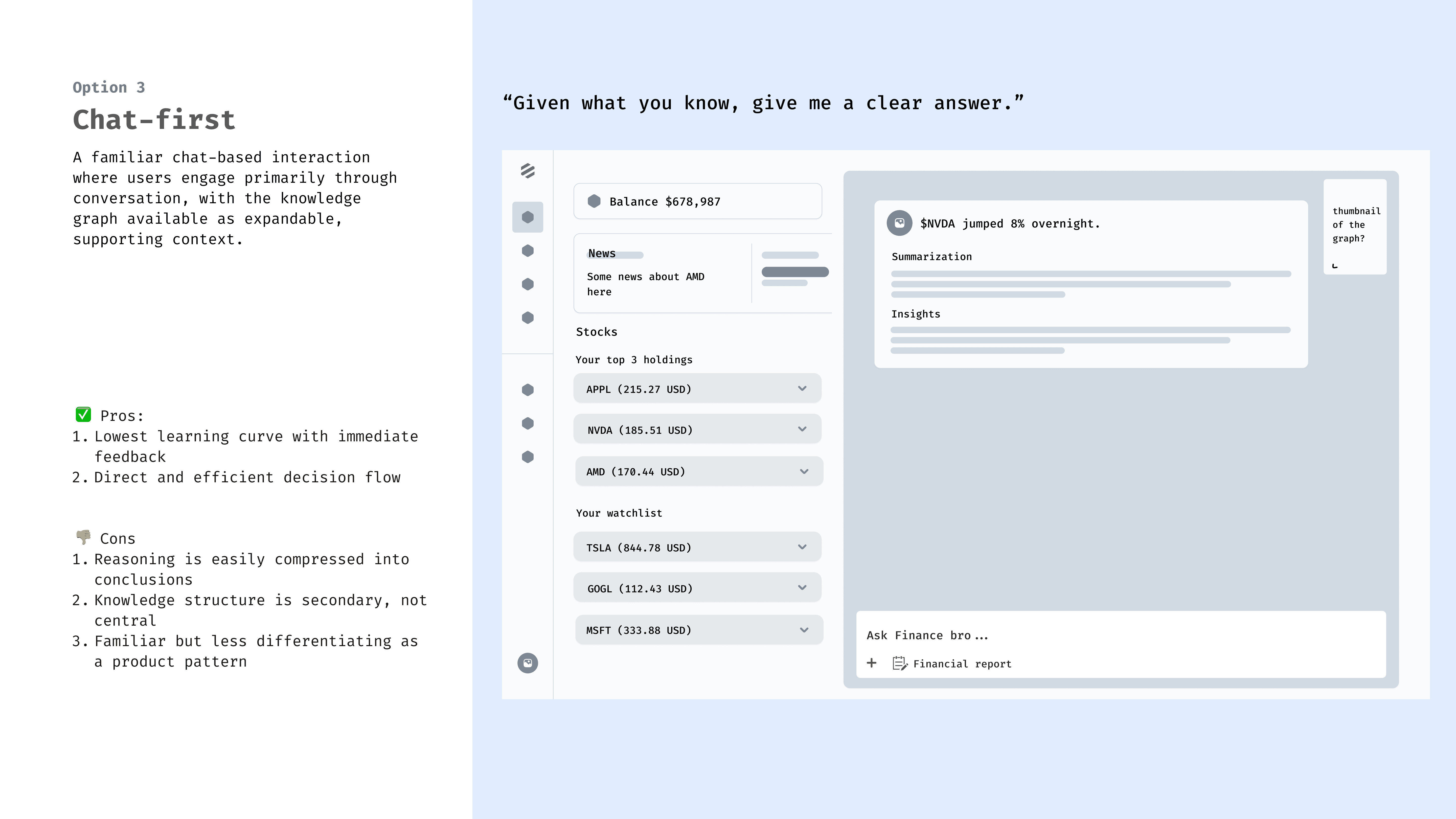
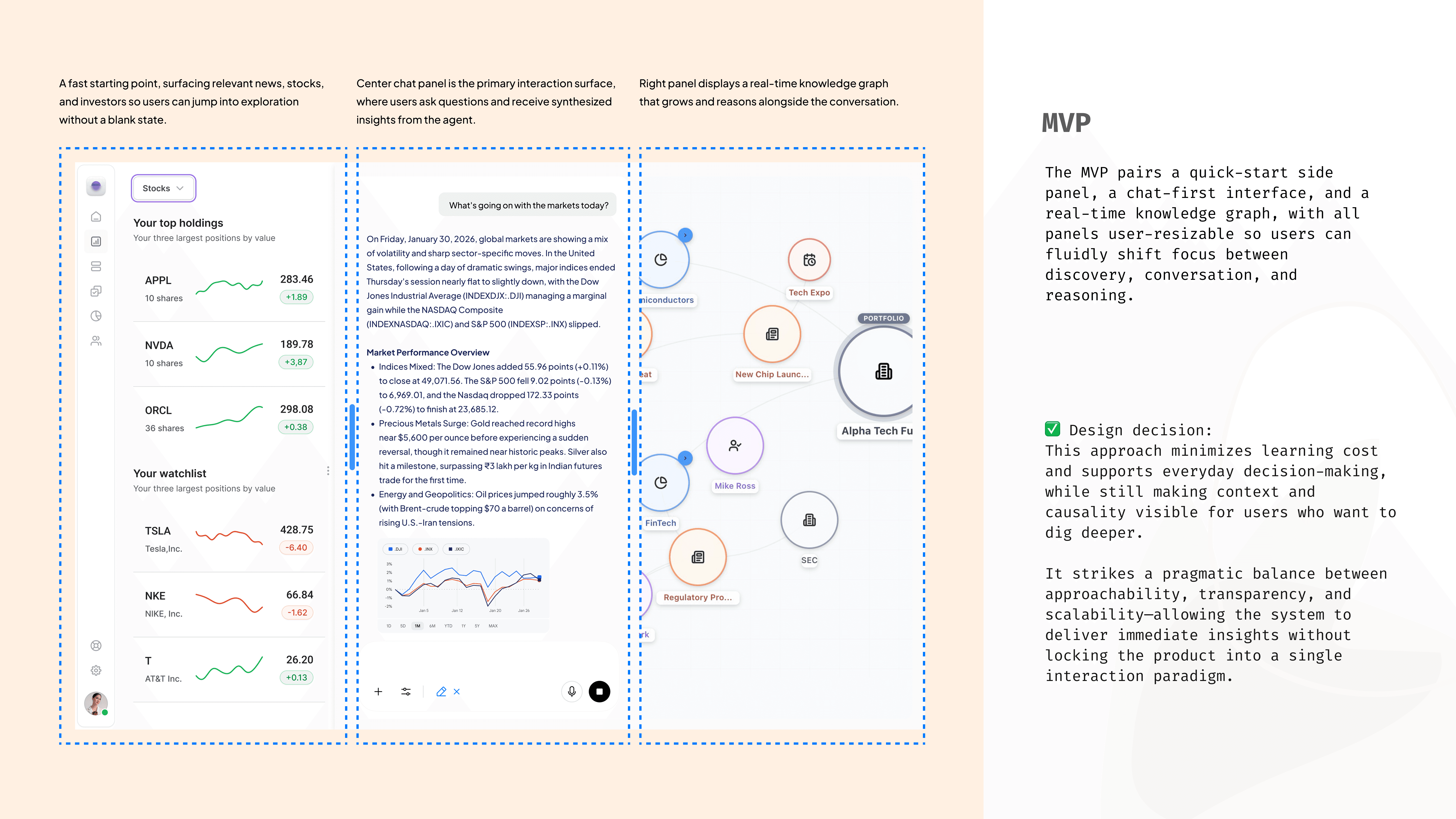
After evaluating the design trade-offs and market differentiation across multiple interaction models, the long-term vision is a unique graph-centric investing workbench that reasons over assets, companies, news, and events as an interconnected system. Because delivering this experience demands substantial technical and design rigor to avoid cognitive overload, the MVP starts with a simpler, chat-first layout supported by a real-time knowledge graph—allowing us to validate core reasoning and user trust before scaling toward the full vision.
After evaluating the design trade-offs and market differentiation across multiple interaction models, the long-term vision is a unique graph-centric investing workbench that reasons over assets, companies, news, and events as an interconnected system. Because delivering this experience demands substantial technical and design rigor to avoid cognitive overload, the MVP starts with a simpler, chat-first layout supported by a real-time knowledge graph—allowing us to validate core reasoning and user trust before scaling toward the full vision.
Co-building with AI
Co-building with AI
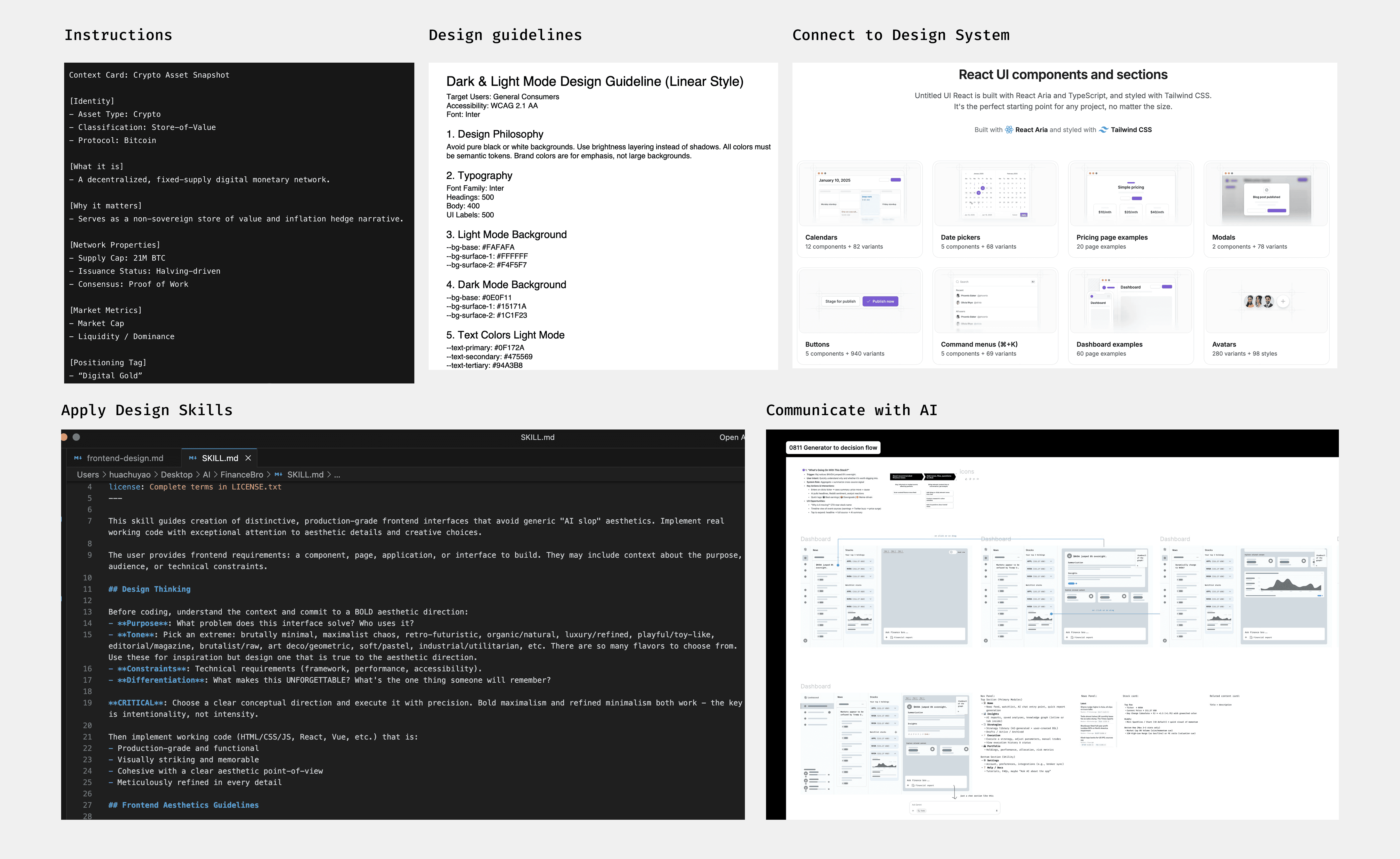
I defined core interaction flows and wireframes to establish clear design intent, then iteratively taught the system to understand those patterns and constraints. Within this shared context, I delegated parts of the interface to AI-generated, generative UI — using it to explore variations, adapt layouts, and accelerate iteration.
I defined core interaction flows and wireframes to establish clear design intent, then iteratively taught the system to understand those patterns and constraints. Within this shared context, I delegated parts of the interface to AI-generated, generative UI — using it to explore variations, adapt layouts, and accelerate iteration.
Current Status
Current Status
This project is actively evolving.
Due to its exploratory nature and ongoing iteration on generative UI and agent behavior, I’m intentionally selective about what’s shared publicly.
A working prototype and deeper system walkthrough are available upon request.
This project is actively evolving.
Due to its exploratory nature and ongoing iteration on generative UI and agent behavior, I’m intentionally selective about what’s shared publicly.
A working prototype and deeper system walkthrough are available upon request.
Next Step & Reflection
Next Step & Reflection
As SolvectAI continues to evolve, my next focus is on deepening the boundary between human-defined design intent and AI-driven generation. I plan to further explore the model’s capabilities in generative UI, clarifying which interaction patterns, constraints, and decision surfaces must be explicitly defined by a product designer, and which elements can be safely delegated to AI for adaptive layout and presentation.
On the product side, we are running paper trading experiments to validate strategy performance and profitability. In parallel, we’ve begun working with early adopters and will continue engaging quant traders to refine both agent behavior and learning loops based on real-world feedback.
This project reshaped how I think about product design in AI-native systems. Designing an agent-driven product isn’t about adding AI to an interface or wrapping a product with LLMs — it requires rethinking how reasoning, action, and learning operate as a system. I learned to design beyond screens, focusing instead on agent behavior, feedback loops, and human–AI collaboration.
As SolvectAI continues to evolve, my next focus is on deepening the boundary between human-defined design intent and AI-driven generation. I plan to further explore the model’s capabilities in generative UI, clarifying which interaction patterns, constraints, and decision surfaces must be explicitly defined by a product designer, and which elements can be safely delegated to AI for adaptive layout and presentation.
On the product side, we are running paper trading experiments to validate strategy performance and profitability. In parallel, we’ve begun working with early adopters and will continue engaging quant traders to refine both agent behavior and learning loops based on real-world feedback.
This project reshaped how I think about product design in AI-native systems. Designing an agent-driven product isn’t about adding AI to an interface or wrapping a product with LLMs — it requires rethinking how reasoning, action, and learning operate as a system. I learned to design beyond screens, focusing instead on agent behavior, feedback loops, and human–AI collaboration.
More Details Available Upon Request
Due to confidentiality, I’m unable to share further details publicly. I’d be happy to share more about the design approach, scope, and impact in a conversation.
More Details Available Upon Request
This page represents key highlights from my four years at Oracle.
Due to confidentiality, I’m unable to share further details publicly. I’d be happy to share more about the design approach, scope, and impact in a conversation.
Next project
